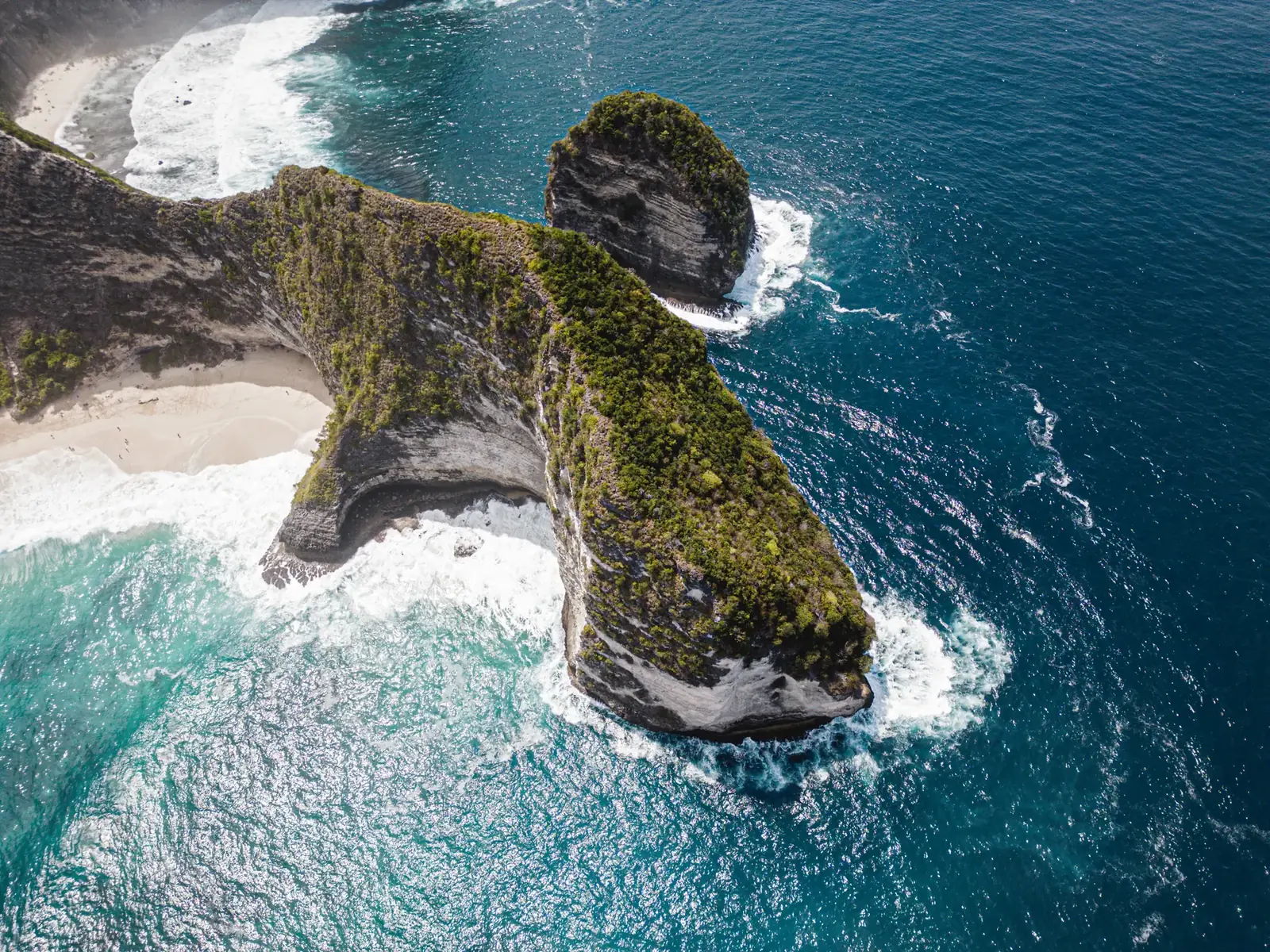
West coast
Kelingking Beach.
View the T-Rex shape of Kelingking Beach from the top, or climb down to the beach. The climb is steep and of intermediate difficulty. Crystal Bay, Broken Beach and Angel’s Billabong are on the same coast.
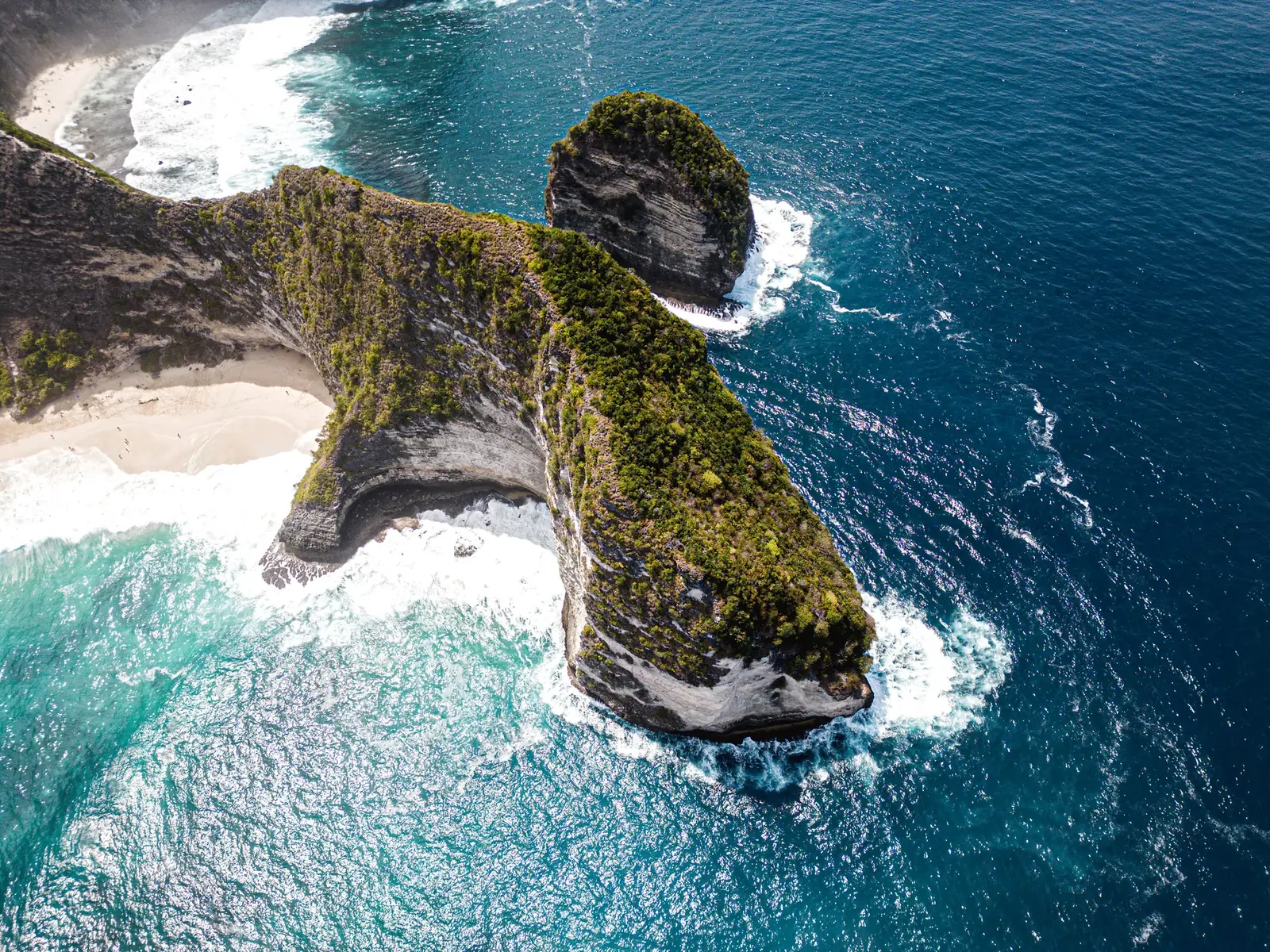
Deep Roots is in Ped, on the north of Nusa Penida — a short ride from the harbours after the boat from Bali. Here is how to get here, and a clear look at the island itself.
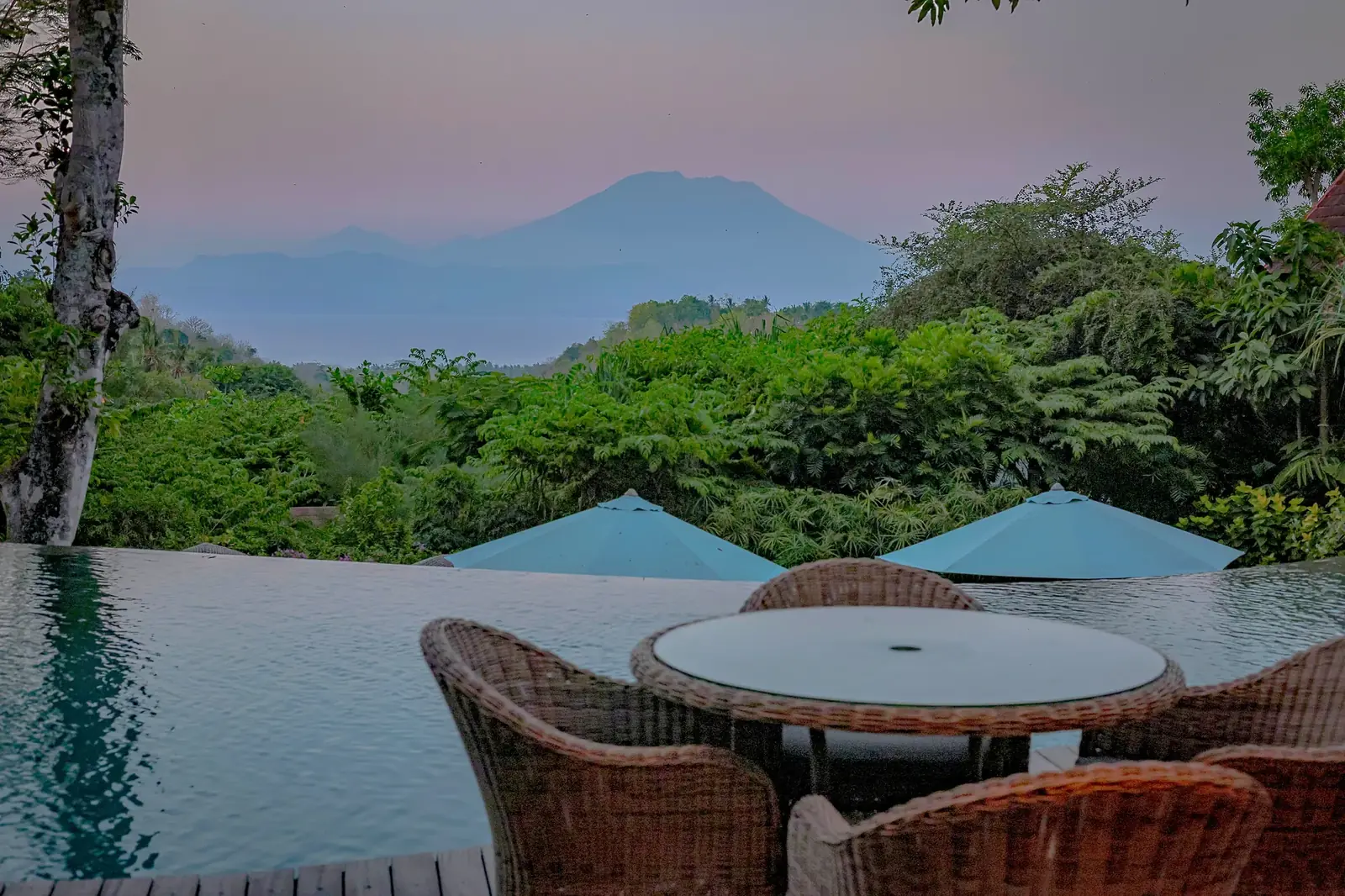
Ped, Nusa Penida
Nusa Penida lies just southeast of mainland Bali, across the Badung Strait. Deep Roots is in Ped — Dusun Pendem, Desa Ped — with our rooms, dive centre, The Leaf Yoga Shala and The Terrace together at the resort.
It is a comfortable base for the rest of the island. We suggest allowing plenty of time for journeys: road conditions and travel times vary.
Getting here
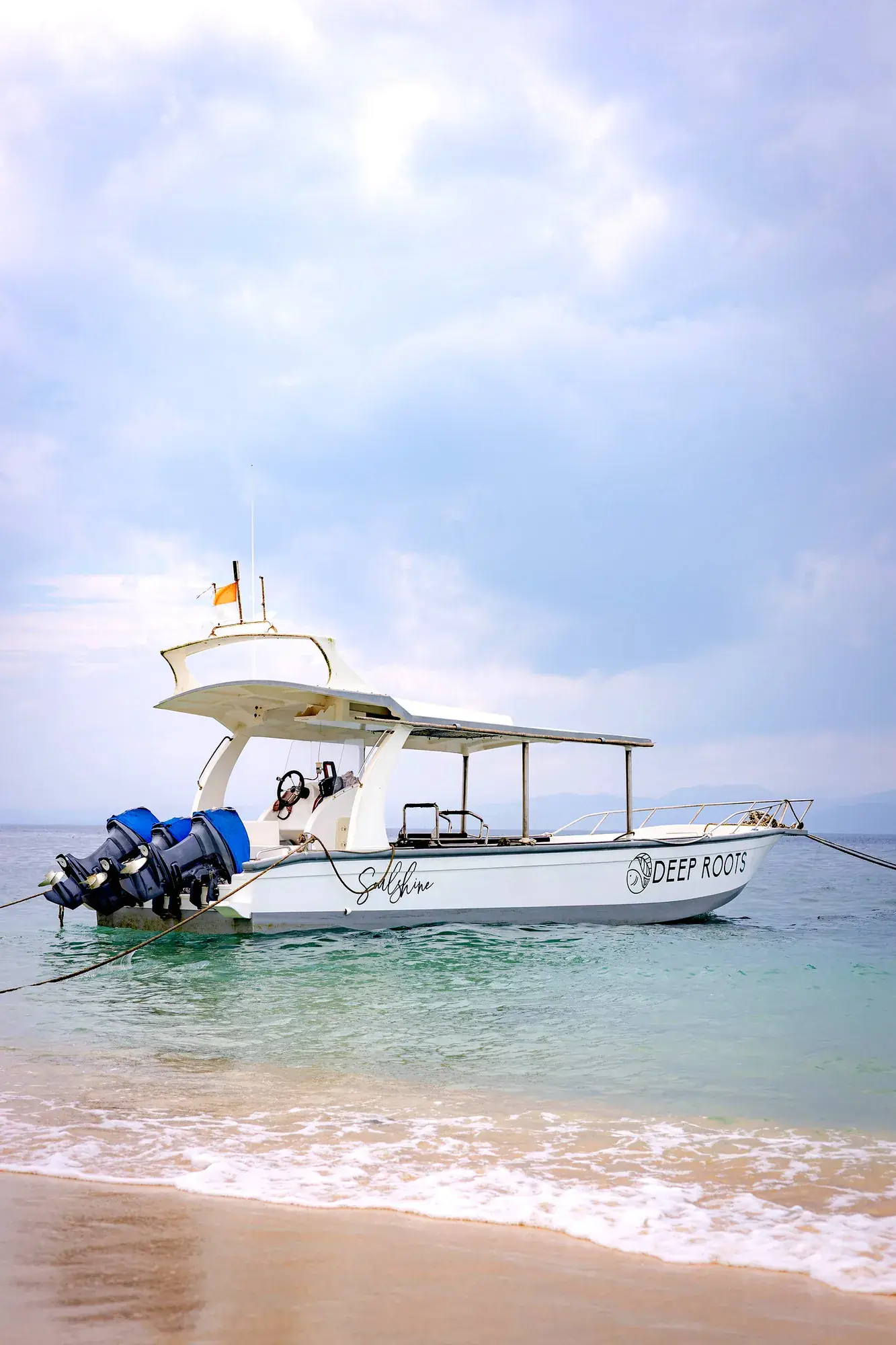
The usual way is a fast boat from Sanur, on Bali’s south-east coast, to the harbours on the north of Nusa Penida. Deep Roots can collect you from the harbour.
Boat routes and departures can change, so check the service for your date. Sanur often involves a wet landing, so simple shoes help. Tell us your harbour and arrival time so we can be ready.
The island
Nusa Penida is known for its limestone cliffs, clear water and quiet beaches. These are the places most guests ask about.
West coast
View the T-Rex shape of Kelingking Beach from the top, or climb down to the beach. The climb is steep and of intermediate difficulty. Crystal Bay, Broken Beach and Angel’s Billabong are on the same coast.
East coast
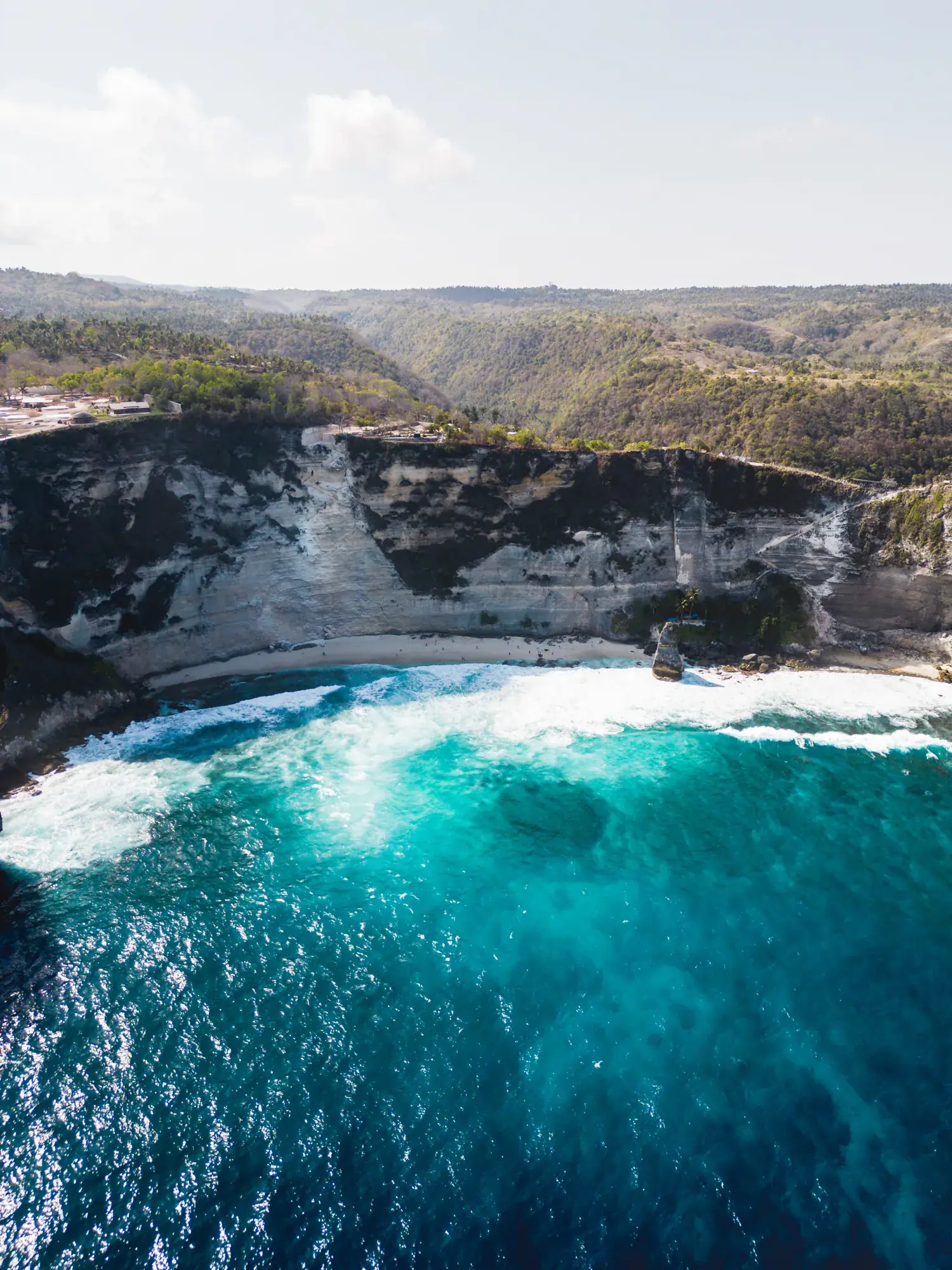
The tree house overlooks Diamond Beach. From there you can walk down to Atuh or Diamond Beach — Atuh has stalls and a place to sit and swim. Thousand Island viewpoint is on the same stretch of coast.
West coast
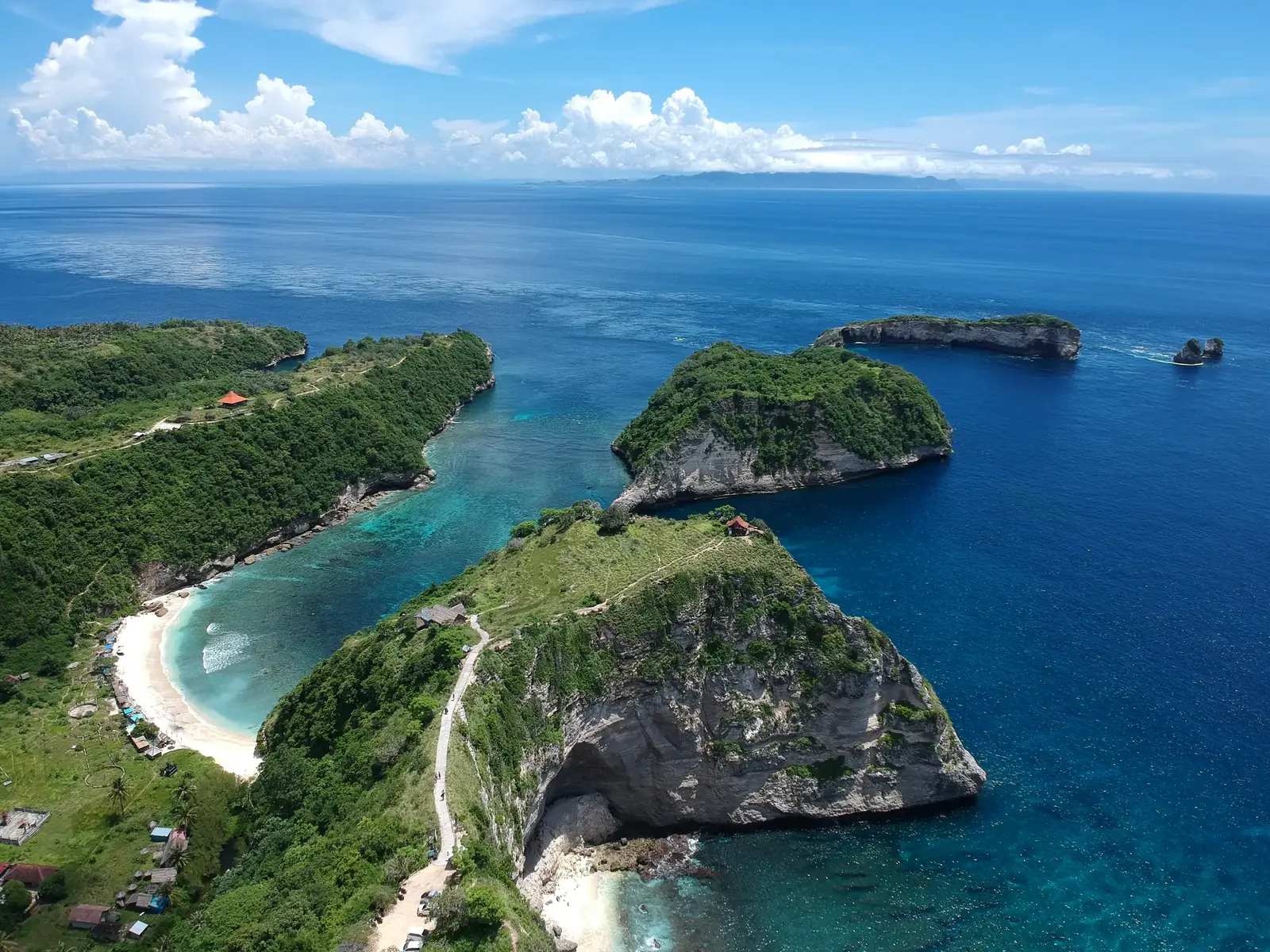
Broken Beach is a round cove with a natural arch where the ocean flows in. Angel’s Billabong is close by, where the waves meet the rocks. Both are stops on our west-coast tour.
On the water
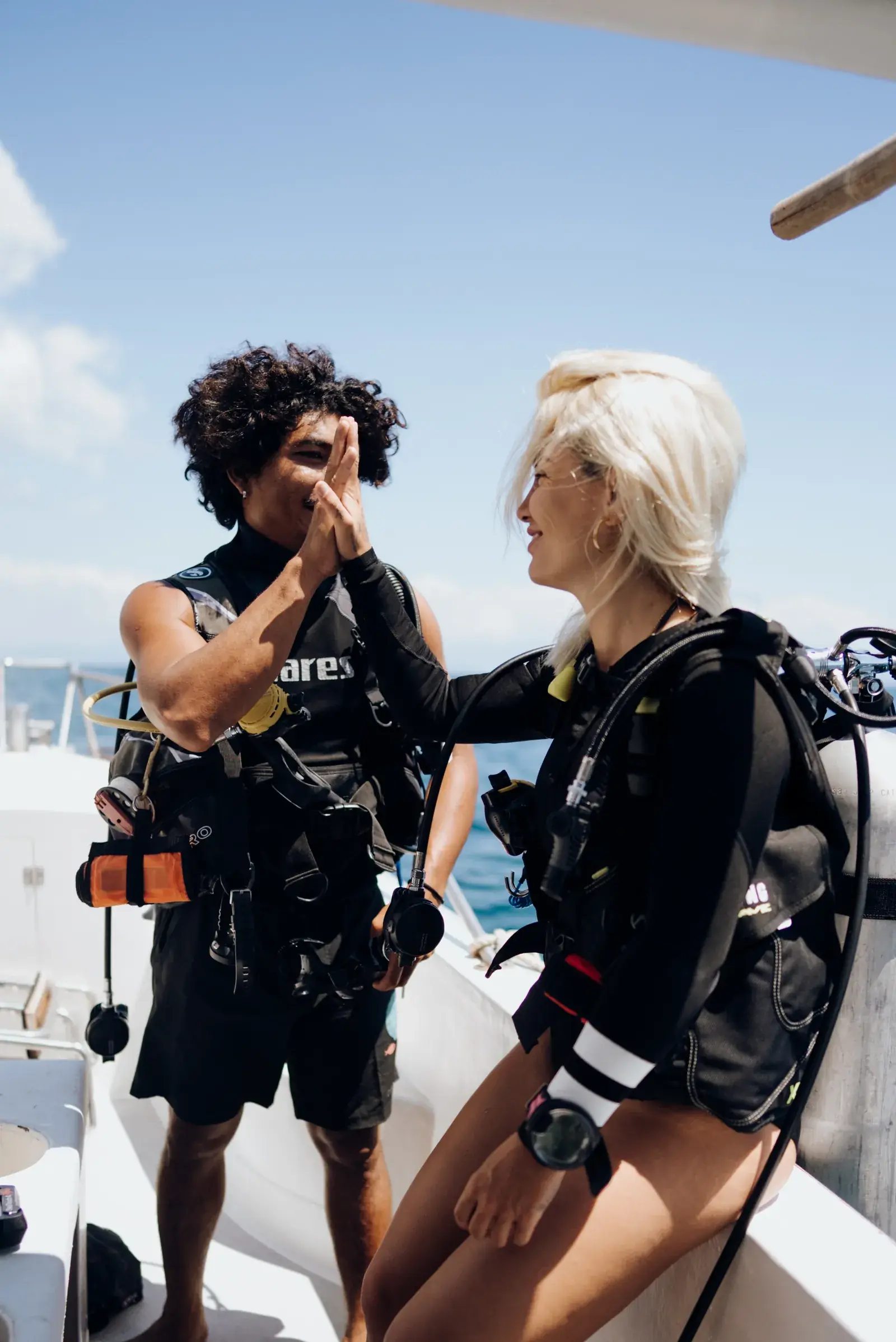
Manta Point is one of the island’s best-known dive sites: reef manta rays come to cleaning stations here through much of the year. Crystal Bay, on the west coast, is a place to swim and watch the sunset, and a classic dive site — including, in the cooler months, the chance of ocean sunfish. Sightings are never guaranteed.

Local life
Nusa Penida shares Bali’s Hindu traditions, and feels quieter and less built-up than the mainland. On the east of the island, Goa Giri Putri is a Hindu temple inside a cave — a stop on our east-coast tour.
If you would like a closer look at local craft and cooking, you can join a fabric-weaving workshop or a Balinese cooking class at The Terrace. Deep Roots was born from a love and respect for the community and the outdoors: a leaf and a fish hold our ethos — back to nature, closer to each other, and back to ourselves.
When to come
There is no single month that suits everyone. It depends on the weather you prefer, how busy you like the island, and whether you are here to dive.
These months usually bring brighter skies and easier exploring. July and August are the busiest, with more people at the well-known viewpoints.
April to May and September to October often combine good weather with fewer visitors than mid-year. The island can still be green after the rains, and the sea is often calmer later in the dry season.
It does not rain all day, every day, and mornings are often clear. The island is quieter then. Sea conditions can still change boat plans, as they can in any month.
For diving, there is a reason to come in every season. Manta rays are seen through much of the year; ocean sunfish are most often seen from July to October, when the water is cooler. Sea conditions can change boat and dive plans, and wildlife sightings are never guaranteed.
Before you travel
A little planning makes the last part of the journey, and the days that follow, much easier.
Tell us your harbour and arrival time so we can collect you, or confirm whether a transfer is already included in your booking. Boat routes and departures can change, so check the service for your date.
Sanur often involves a wet landing, so simple shoes help. On the island, Grab and Gojek rarely work. A private driver is the more comfortable way around; scooters suit experienced riders only, as roads can be steep, narrow and rough. Journeys often take longer than a map suggests, and after sunset the roads are very dark.
The west coast and the east coast sit in different parts of the island, so it helps to group nearby places. We can arrange a west-coast tour, an east-coast tour, or both in one day. Carry some cash for stalls and small purchases.
At the resort
Once you have your route to Ped, you can shape the days around the water, the shala, or a week-long retreat.
Mountain View Cottages and Garden View Rooms in Ped.
See the rooms ↗SSI courses, guided fun dives and snorkelling from our dive centre.
Explore diving ↗Daily yoga and meditation at The Leaf Yoga Shala.
See the yoga ↗Seven-night Dive, Yoga, or Dive & Yoga retreats, with harbour transfers included.
See the retreats ↗East-coast and west-coast days, or both coasts in one day.
See the tours ↗Talk to us
WhatsApp, Instagram or email — we can help with boats, harbour transfers and the rest of your plan.
Choose your room dates, or tell us your plans and we’ll help.