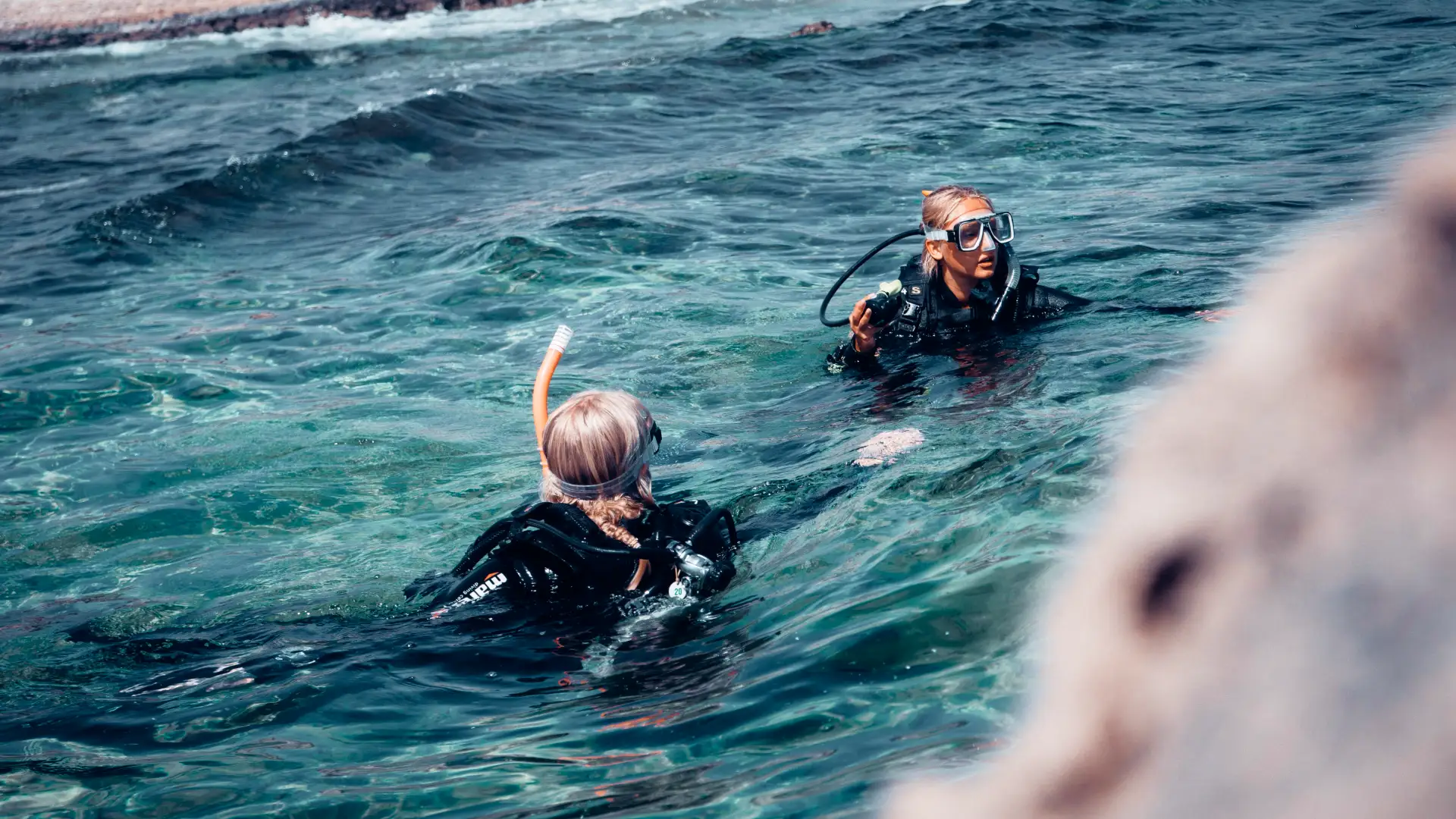
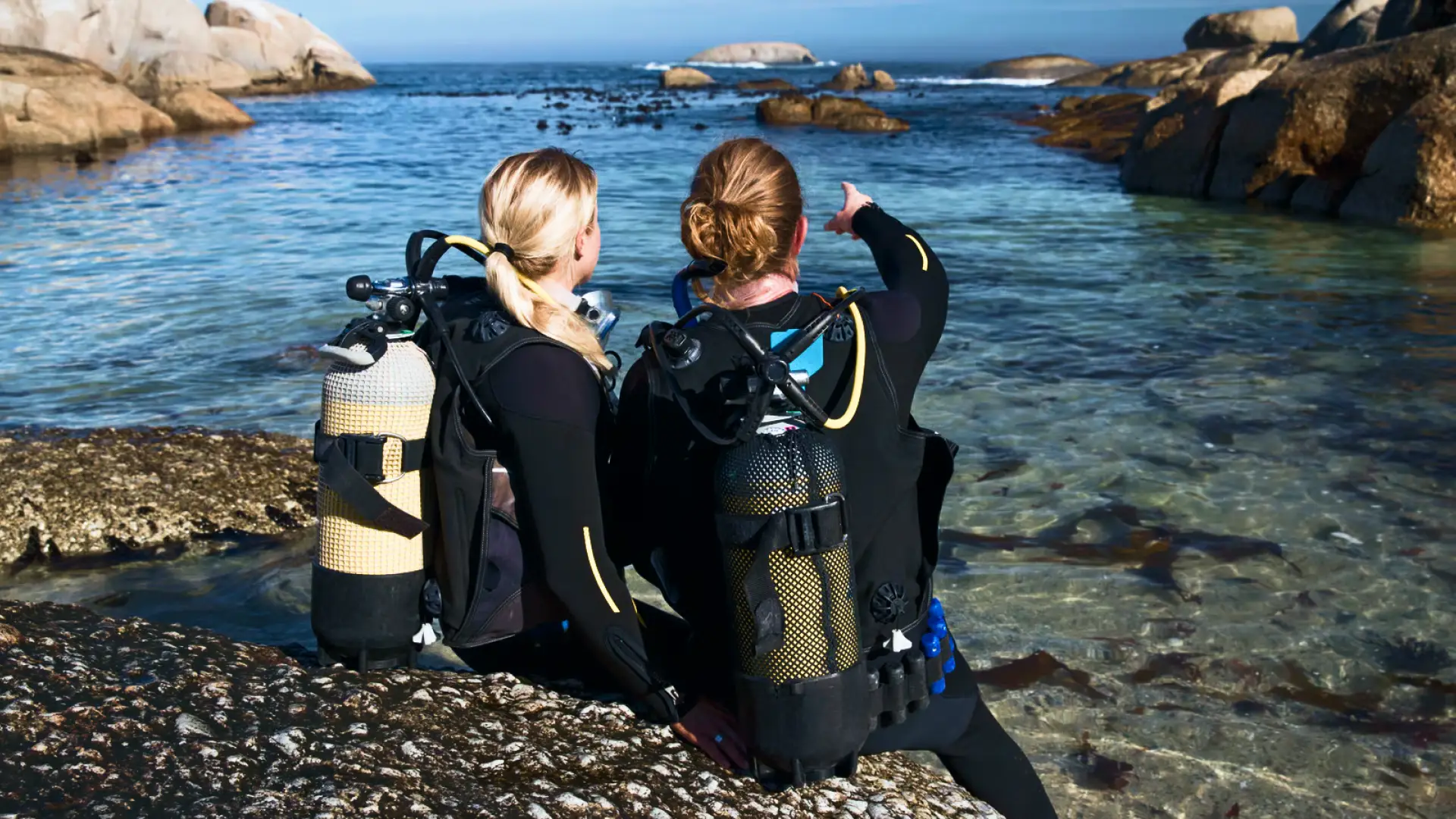
Both scuba diving and freediving give you access to the underwater world, but they require completely different mindsets, gear, and rhythms in the water. One relies on a full rig of life-support equipment to extend your time below the surface, while the other depends on a single breath for a quiet, lightweight descent.
Here are five key differences between scuba diving and freediving to help you decide which sport fits your goals in the water.
Scuba Divers Breathe Underwater While Freedivers Hold Their Breath
The biggest difference when comparing scuba diving vs freediving is how divers breathe underwater. Scuba divers use a tank of compressed air, allowing them to breathe continuously while exploring. Freedivers hold their breath after taking a breath at the surface and use breathing and relaxation techniques. This difference affects how long they stay underwater and how they experience the marine environment.
- Scuba diving: Uses a tank and breathing equipment, so divers can stay underwater for longer periods while exploring reefs and marine life.
- Freediving: Relies on breath-holding and controlled breathing, creating a quieter and more streamlined experience underwater.
- Time underwater: Scuba divers can breathe continuously, while freedivers return to the surface to breathe.
- Training: Both activities require proper training, but the skills and safety practices are different for each.
The Equipment Is Very Different
Equipment is another key difference when comparing scuba diving vs freediving. Scuba diving uses more gear, including a tank, BCD, regulator, weights, and dive computer. Freediving uses less equipment, usually a mask, snorkel, weight belt, and long fins. The lighter setup gives freedivers more freedom and movement in the water.
- Scuba diving gear: Includes an air tank, BCD, regulator, weights, dive computer, mask, and fins for longer underwater exploration.
- Freediving gear: Usually includes a low-volume mask, snorkel, weight belt, and long fins designed for efficient movement.
- Setup: Scuba equipment takes more time to prepare, while freediving gear is simpler and lighter.
- Movement: Freediving’s minimal equipment allows greater freedom and flexibility underwater.
Scuba Divers Can Stay Underwater Much Longer
Time underwater is another key difference between scuba diving vs freediving. Scuba divers can often stay underwater for around 45 minutes to an hour or more, depending on depth and air use. Freedivers stay underwater for much shorter periods because they rely on breath-holding, with recreational dives often lasting around one to two minutes. However, freedivers can repeat short dives, while scuba divers need to follow limits related to depth, nitrogen exposure, and surface intervals.
The Training and Safety Rules Are Different
Safety is important in both scuba diving vs freediving, but each sport requires different skills and training. Scuba training focuses on using equipment, managing air supply, and controlling ascents. Freediving training focuses on breath-holding, relaxation, equalization, and safe diving techniques. Both activities require proper training and a strong focus on safety.
- Scuba Training: Scuba diving courses heavily emphasize managing your complex equipment, strictly monitoring your air limits, and carefully controlling your slow ascent rate to safely off-gas absorbed nitrogen. You quickly learn that holding your breath while scuba diving is the number one golden rule you must never, ever break.
- Freediving Training: Conversely, confidently holding your breath is the entire foundational core of freediving! Training focuses intensely on deep relaxation, expanding lung capacity, mastering ear equalization techniques, and strictly adhering to a dedicated buddy system where one diver always watches the other safely from the surface.
The Underwater Experience Feels Different
The sensory experience is another major difference between scuba diving vs freediving. Scuba diving offers a detailed underwater experience, but the regulator and bubbles can create noise that may affect nearby marine life. Freediving is quieter and more streamlined, which can make encounters with marine animals feel more natural. Overall, scuba diving feels more equipment-focused, while freediving can feel quieter and more peaceful.
Which One Should Beginners Try?
Choosing between scuba diving vs freediving depends on the type of underwater experience that feels most appealing. Scuba diving suits those who want longer dives, detailed reef exploration, photography, or wreck diving. Freediving may suit those who prefer lighter equipment, shorter dives, and a quieter experience. Some divers also enjoy both activities to experience the ocean in different ways.
- Scuba diving: Stay underwater longer and explore reefs, wrecks, and marine life in detail.
- Freediving: Enjoy a lighter setup, natural movement, and a quieter underwater experience.
- For beginners: Start with proper training and choose the activity that matches your comfort and goals.
- Both options: Learning each discipline can build different skills and underwater confidence.
If you're still on the fence, taking a half-day discovery session in a pool or shallow bay is usually the fastest way to see which setup feels most natural to you.
Make Nusa Penida Your Next Scuba Diving Destination
Once the choice between scuba diving vs freediving is made, it’s time to find the right place to explore. If you are diving Nusa Penida, you can look forward to rich marine life, clear water, and iconic pelagics. Deep Roots pairs your time underwater with a comfortable stay close to the best dive spots
Ready to explore Nusa Penida beneath the surface? Stay at a Nusa Penida resort that brings diving and downtime together. Dive, relax, and enjoy the island at your own pace. Make Deep Roots your base for an unforgettable diving Nusa Penida adventure.